Baneberry Actaea rubra Buttercup family (Ranunculaceae)
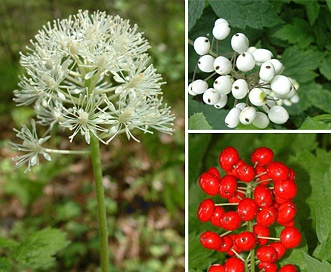
As the name suggests, Baneberry's distinctive white-plumed plant is toxic. All parts of the plant are poisonous, especially the roots and . The Cheyenne Indians consider Baneberry sacred. The plant's porcelain-like led to the common names "china-" and "doll's eye." "Actaea" is the ancient name for this plant. "Rubra" is Latin for "red."
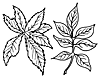
Showy , 24-40" tall. Characterized by a white rounded cylindrical of densely clustered flowers atop long, naked stalks. Crinkled leaves along stem are , coarsely sharp-, , and usually horizontal. clasp stem. Glossy red (sometimes white) retains a dark , which gives the the appearance of a doll's eye.
A leaf is compound when multiple leaflets are on the same stem.
A perennial plant lives and blooms for many years.
A herb is a plant whose stems die back to the ground in the winter.
Like the teeth on a saw, leaves and other surfaces can have toothed edges.
The botanical term "berry" is different from common usage. Strawberries and raspberries are not berries.
But a tomatoe is. A true berry is a fruit with the seeds immersed in the pulp.
basal leaves -- a leaf that grows lowest on the stem of a plant.
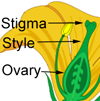
stigma - The tip of a pistil that receives the pollen.
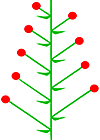
A raceme is an unbranched, indeterminate type of inflorescence bearing flowers
having short floral stalks along its axis.