Al Schneider's Rocky Mountains Plant Descriptions

Geyer's Onion
Allium geyeri
Onion family (Amaryllidaceae)

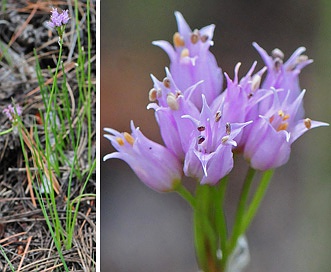
This very common onion occurs from the high foothills to timberline in moist (or just previously moist) and gravelly areas. Allium geyeri can be solitary just after snows melts and the ground begins to dry or a bit later in the season it can carpet with hundreds of plants. Tiny purple, pink, or white buds open to very light pink/white flowers. Compare this onion with the very similar Nodding Onion (Allium cernuum). Charles Geyer came to the U.S. in 1834 and botanized extensively from Missouri to Vancouver until his return to Europe in 1844.

©2010 Jerry Oldenettel
Description

with smell of onion, from that is 1/3 to nearly 1" thick, , buried from 1/4 to 3". Leaves 2 or 3 per flower stem and shorter than stem. Stems from 5-15" tall. 5-37 flowered. pink or white, 1/4 to 2/5" long with tips curved b ack. Flowers replaced by bulblets.

Field Marks

Light purple/pink/white buds and then flowers atop leafless smooth stem with 2 or 3 arching narrow leaves.

© Al Schneider

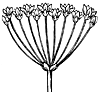
An umbel is a collection of flowers on short stalks which spread from a common point, somewhat like umbrella ribs. The arrangement can vary from being flat-topped to almost spherical.

meadow -- Large grass and wildflower filled area with few, if any, trees.

A herb is a plant whose stems die back to the ground in the winter.

perianth -- the non-reproductive part of the flower such as petals and sepals.

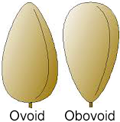
ovoid -- egg-shaped, with the wider portion at the base.

A bulb is an underground stem, the main body of which consists of thickened scales, which are in reality leaves or leaf bases, as in the onion.

A perennial plant lives and blooms for many years.