Al Schneider's Rocky Mountains Plant Descriptions

Cutleaf Anemone
Anemone multifida
Buttercup family (Ranunculaceae)

Anemone is a large of some 120 species worldwide. Like all buttercups, anemones produce protoanemonin, which is toxic and can cause rashes, nausea, and worse if touched or ingested. The Blackfeet Indians used the cotton-like hairs from anemone seed heads to burn over hot coals and inhale to soothe headaches. The plant's delicate colors are also most soothing to the eye and mind. The word "Anemone" is a corruption of 'Na'man', the Semitic name for Adonis, whose blood brought forth the Anemone of the Middle East.

©2016 Al Schneider, Walter Siegmund

Description

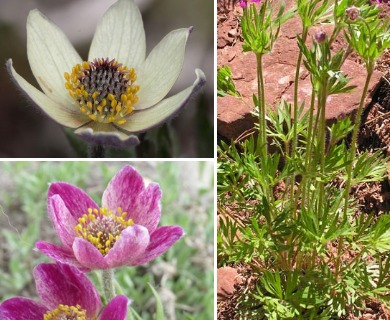
Distinctive , 8-20" tall, with 1-3 gray-hairy stems topped by single flower comprised of 5-9 , ranging in color from cream to yellow to red, with combination of colors sometimes appearing on a single plant. cluster of long-petioled leaves divided into 3 or more . Whorl of smaller leaves midway along stems. are silk-tufted in dense round heads.

Field Marks

Single white-rosy flowers on hairy stems and deep-cut leaves.

© Al Schneider

silky -- Covered with fine soft hairs, with a lustrous sheen. Satiny to the touch.

A perennial plant lives and blooms for many years.

lobe -- A rounded parts of a leaf (or other organ).

A herb is a plant whose stems die back to the ground in the winter.

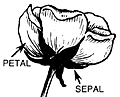
Usually green, sepals typically function as protection for the flower in bud, and often as support for the petals when in bloom.

basal -- at the base, situated or attached at the base.

achene -- a type of simple dry fruit produced by many species of flowering plants. For example, a rose hip holds a few achenes.

fruit -- any seed-bearing structure in flowering plants. It is formed from the ovary after flowering.

genus -- A subdivision of a botanical Family in which all members have a significant number of similar characteristics.

lanceolate -- Lance-shaped. Long, wider in the middle.