Al Schneider's Rocky Mountains Plant Descriptions

Broadleaf Arnica
Arnica latifolia
Aster family (Asteraceae)

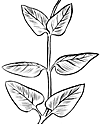
There are a number of yellow Arnicas found on in the Rockies and they often grow in the same general vicinity. A careful scrutiny will show you the sometimes small, sometimes large differences. You can distinguish A. latifolia from the other species by observing its broad leaves attached close to the stem, a white (appearing barbed in a hand lens), and 5-9 pairs of leaves. "" is Latin for "broad leaf."


©2008 Walter Siegmund

Description

Leafy plant to 16" tall, sparsely hairy and often slightly tacky or sticky. Broad or leaves in pairs, or nearly so, the middle leaves the longest at 2-3", truncated or at the base. Stems erect and having 1-5 hairy and flower heads up to 3/4" high, with 8-12 yellow , and a white, barbed .
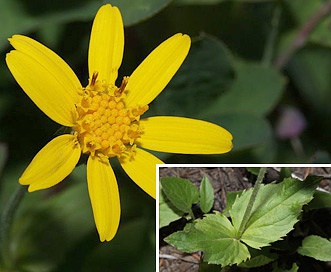

Field Marks

Erect stems with 5-9 pairs of broad leaves, topped with 1-5 yellow flower heads having a white, barbed .

© Al Schneider

ray flowers -- The outer petals of a sunflower or daisy are ray flowers.

latifolia -- wide leaves.

ovate -- Oval, egg-shaped, with a tapering point.

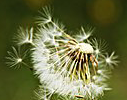
pappus -- Small scales, bristles or hairs at the top of the seed in Asteraceae. For example, dandelion parachutes. Plural: pappi.

Glands are plant structures that secrete liquids, salts or other substances. Glands often appear as hairs with a drop of liquid at the end.

In an opposite leaf arrangement the leaves come in pairs with one leaf on each side of a stem.

sessile -- attached without a stalk. For example, a leaf that clasps the stalk. A petiolate leaf has a stalk.

cordate -- heart-shaped.
subcordate -- somewhat heart-shaped.

lanceolate -- Lance-shaped. Long, wider in the middle.