Al Schneider's Rocky Mountains Plant Descriptions

Hairy Arnica
Arnica mollis
Aster family (Asteraceae)

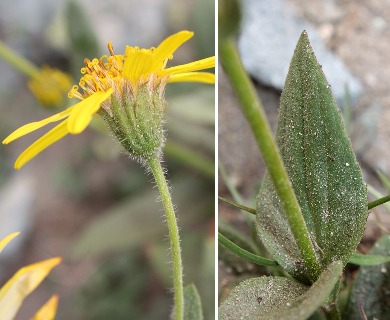
Hairy Arnica (Arnica mollis) tends to grow in small, tight, upright clumps but it can spread into large colonies. Its leaves are far narrower than those of Arnica cordifolia; its stems are hairy and sticky; and its flowers orange/yellow. Arnica mollis might at first appear to be far less common than Arnica cordifolia in our area, but as one explores more trails and mountainsides one finds Arnica mollis in abundance. This Arnica, as most, has lovely lemon-scented flowers.

Arnica mollis and Arnica cordifolia were first collected by Thomas Drummond in the Canadian Rockies in the 1820s and they were named by William Hooker in his "Flora Boreali-Americana" in 1834. "Mollis" is Latin for "soft." The word "Arnica" means "lamb's skin," and probably refers to the downy soft leaves of some species.

©2010 Walter Siegmund
Description

Plants from 6 to 28" tall, stems erect, clump-forming, or branched in the . Hairy and . smaller than the stem leaves and often withered at flowering time, the 2-7" long and 2/5 to 2" wide, to , to , becoming upwards on the plant, 3-4 pairs, largest below the middle. Flowerheads 1-5. hairy, . 12-18, yellow. brown. a hairy .

Field Marks

Softly hairy plant with large, showy yellow flowers which have tawny hairs.

© Al Schneider

ray flowers -- The outer petals of a sunflower or daisy are ray flowers.

oblanceolate -- top wider than bottom

cauline leaves -- leaves growing on a stem and especially on the upper part.

achene -- a type of simple dry fruit produced by many species of flowering plants. For example, a rose hip holds a few achenes.

obovate -- Teardrop-shaped, stem attaches to tapering point.

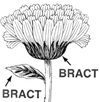
Bracts are modified leaves associated with a flower.

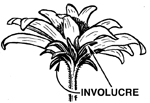
Involucre is the name given to the circle or spiral collection of bracts around a flower-cluster.

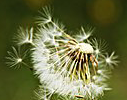
pappus -- Small scales, bristles or hairs at the top of the seed in Asteraceae. For example, dandelion parachutes. Plural: pappi.

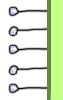
Glands are plant structures that secrete liquids, salts or other substances. Glands often appear as hairs with a drop of liquid at the end.

fruit -- any seed-bearing structure in flowering plants. It is formed from the ovary after flowering.

sessile -- attached without a stalk. For example, a leaf that clasps the stalk. A petiolate leaf has a stalk.

elliptic -- Oval, with no point or a very short point.

basal leaves -- a leaf that grows lowest on the stem of a plant.

A simple leaf blade is one that is not divided into separate leaflets.

lanceolate -- Lance-shaped. Long, wider in the middle.

An inflorescence is a group or cluster of flowers arranged on a stem.