Al Schneider's Rocky Mountains Plant Descriptions

Parry's Arnica
Arnica parryi
Aster family (Asteraceae)

This rayless Arnica generally grows at medium-to-high elevations, but it rarely reaches the zone. Compare its rayless flowers with other Arnica flowers. It does not grow as densely as Arnica cordifolia and Arnica mollis but it can grow in patches of many dozens of plants -- as well as in small scattered patches. This species was first collected by Charles Parry, eminent 19th century Colorado botanist, in Clear Creek, Colorado in the early 1860s and was named for Parry in 1864 by Asa Gray. The word "Arnica" means "lamb's skin," and probably refers to the downy soft leaves.
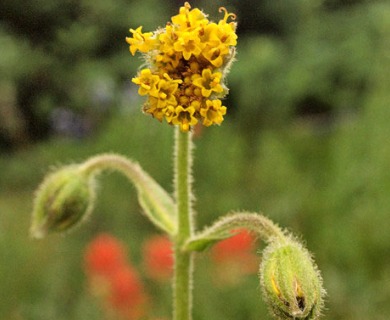

©2014 Susan McDougall, Trees Live Here.

Description

Slender , up to 20" tall, with branching flower stems and rayless flowers. Plant overall hairy. Leaves mostly , to , margins or irregularly , with up to 4 pairs of shorter leaves on stem that are strongly reduced upwards. Flowerheads erect or often nodding, comprised of only yellow, brown-yellow . are sharp pointed. somewhat rounded to pointed, edged in purple, with long spreading hairs, often fringed. are to to hairy .

Field Marks

Tall, lanky plant with numerous rayless flowerheads.

© Al Schneider

An entire leaf has smooth edges. Not toothed or lobed.

disc flowers are those in the center of a sunflower or daisy. Not a ray flower.

A perennial plant lives and blooms for many years.

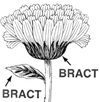
phyllaries -- Leaflike bracts covering the flowers before opening and remaining under the flower after it opens. Also called "bracts". Only used with the sunflower family (Asteraceae).

achene -- a type of simple dry fruit produced by many species of flowering plants. For example, a rose hip holds a few achenes.

A herb is a plant whose stems die back to the ground in the winter.

Bracts are modified leaves associated with a flower.

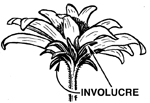
Involucre is the name given to the circle or spiral collection of bracts around a flower-cluster.

basal -- at the base, situated or attached at the base.

Glands are plant structures that secrete liquids, salts or other substances. Glands often appear as hairs with a drop of liquid at the end.

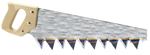
Like the teeth on a saw, leaves and other surfaces can have toothed edges.

fruit -- any seed-bearing structure in flowering plants. It is formed from the ovary after flowering.

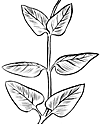
In an opposite leaf arrangement the leaves come in pairs with one leaf on each side of a stem.

elliptic -- Oval, with no point or a very short point.

montane -- inhabiting mountainous country but below timberline.

glabrous -- smooth, glossy, having no bristles or hair-like structures. Bald.

lanceolate -- Lance-shaped. Long, wider in the middle.

alpine -- above the tree line. Thin soil, rocks, short growing season, frost, winter snow.