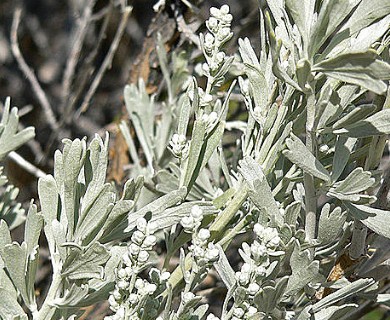
Big Sagebrush Artemisia tridentata Aster family (Asteraceae)
Big Sagebrush is the most common woody species found in western rangelands. It provides vital cover and food for a wide range of wildlife and literally defines sagebrush-steppe habitats in the region. The shrub can live more than 50 years. Artemisia nova is shorter (to 16"), with shorter, usually yellow leaves. The is named for the Greek goddess Artemis.
Erect aromatic shrub to 9' tall. Leaves and young twigs typically gray. Leaves are , wedge-shaped with 3 blunt on their tips. Dense gray hairs on both sides lend leaves their silver-blue color. Leaves persist through the winter. Numerous flowerheads in foot long narrow clusters () consist of small yellow flowers. Bark on older branches gray and shredding. Has distinctive sage smell when leaves are crushed.