Al Schneider's Rocky Mountains Plant Descriptions

American Bistort
Bistorta bistortoides
Smartweed-Buckwheat family (Polygonaceae)

A dainty 2" puff of white announces the Bistort. The soft cottony flower head often has a blush of pink, but as delicate and appealing looking as the flowers are, do not be fooled: One common name for the plant is "Miner's Toes"! Partially red stems and leaves are characteristic, and the reds become more pronounced in the fall. Lewis and Clark were the first to collect this plant for science, and they observed their Native American hosts commonly eating the Bistort's roots and seeds. Fire-roasted, the roots are said to have a chestnut-like taste. "Bi" Latin for "twice," and "torta," "twisted," refer to the contorted roots in some species. This species can easily be confused with its smaller cousin Bistorta vivipara.
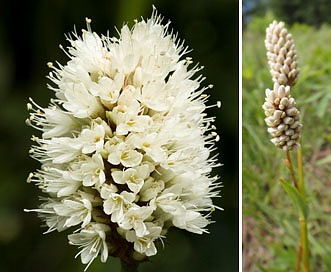

©2012 Barry Rice
Description

Long, slender-stemmed , 8-22" tall, with small white-pink flowers clustered in a short, dense at tip of stem. White extend beyond giving flowerhead the appearance of a brush. long and narrow with long . Stem leaves few, small, and lacking .

Field Marks

Wide cottony white cylinder of flowers on a long stem with few leaves.

© Al Schneider

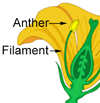
stamen -- the pollen-producing reproductive organ of a flower; The stamen consists of an anther supported by a filament.

A perennial plant lives and blooms for many years.

A herb is a plant whose stems die back to the ground in the winter.

basal leaves -- a leaf that grows lowest on the stem of a plant.

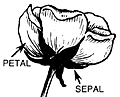
Usually green, sepals typically function as protection for the flower in bud, and often as support for the petals when in bloom.

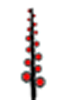
A spike is an unbranched, indeterminate inflorescence in which the flowers are without stalks.

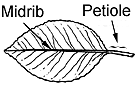
petiole -- the stalk of a leaf.

lanceolate -- Lance-shaped. Long, wider in the middle.

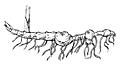
rhizome -- root-like stems that may either grow horizontally at the soil surface or in other orientations underground.