Al Schneider's Rocky Mountains Plant Descriptions

Heartleaf Bittercress
Cardamine cordifolia
Mustard family (Brassicaceae)

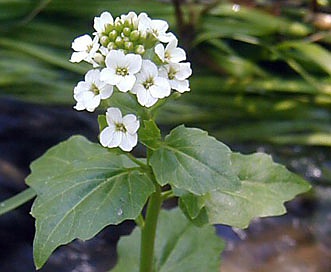
Heartleaf Bittercress abounds along and in mountain streams, and produces extensive and dense patches of lustrous green leaves topped by clusters of brilliant white flowers. Heartleaf Bittercress greenery appears after snow melt, the flowers appear within a few weeks, the plant flowers for many weeks, and its seed pods provide fun along the trail, for they burst open with a squeeze of the fingers. "Cardam" is the name given by Greeks thousands of years ago to Cress plants. Latin gives us both "cord" for "heart" (as in "courageous") and "folia" for "leaf" (as in "foliage"). Asa Gray named this species in 1849 from a specimen collected by Augustus Fendler on the "margin of Santa Fe Creek, in the mountains" near Santa Fe, New Mexico in 1847.

©2009 Barry Breckling
Description

, , erect with stems to 30" tall, usually but may be hairy. Leaves mostly on stem, , leaf is heart-shaped with wavy edges, , to almost an inch long, or spreading. to 1/5", green. Petals twice as long, brilliant white, spreading. Seed pod to over one inch long or erect.

Field Marks

Medium tall plant along and in mountain streams. Extensive and dense patches of lustrous green leaves topped by clusters of brilliant white flowers.

© Al Schneider

A perennial plant lives and blooms for many years.

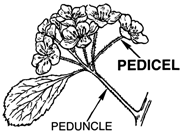
pedicel -- The stem of a single flower.

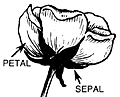
Usually green, sepals typically function as protection for the flower in bud, and often as support for the petals when in bloom.

glabrous -- smooth, glossy, having no bristles or hair-like structures. Bald.

ascending -- growing obliquely upward and usually curved.

blade -- Just the flat part of a leaf. Not the stem.

A simple leaf blade is one that is not divided into separate leaflets.

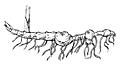
rhizome -- root-like stems that may either grow horizontally at the soil surface or in other orientations underground.