Al Schneider's Rocky Mountains Plant Descriptions

Fireweed
Chamaenerion angustifolium
Evening-Primrose family (Onagraceae)

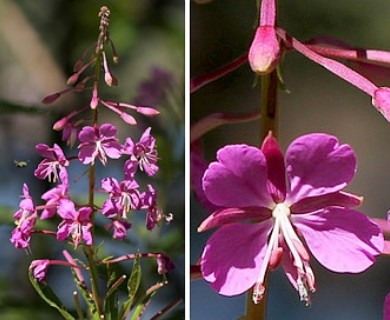
As its common name suggests, Fireweed is one of the first plants to colonize burned areas in moist habitats. It appears in great numbers and creates one of the best flower shows with its numerous richly colored flowers. It then develops long seed pods that ripen and burst open with very visible cotton-covered seeds. The plant is rich in vitamin C and a favored food for bears and other wildlife. Epilobium species are called "willow " because of their willow-like leaves. "Chamerion" is from the Greek "chamae" ("lowly") and "nerium" ("Oleander"). "Angustifolium" means "narrow leaves."

©2014 Yan Soucie
Description

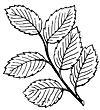
Conspicuous , 3-5' tall, with unbranched leafy stems. and , underside slightly paler with prominent veins. Numerous pink to magenta showy flowers have 4 petals that open first at bottom of the flower and move upward. Fireweed are purple, , and split open to release hairy seeds.

Field Marks

Narrow leaves with prominent veins, showy of pink-magenta flowers, and purple .

© Al Schneider

A perennial plant lives and blooms for many years.

A herb is a plant whose stems die back to the ground in the winter.

fruit -- any seed-bearing structure in flowering plants. It is formed from the ovary after flowering.

leaves alternate along the main stem and are attached singly.

A spike is an unbranched, indeterminate inflorescence in which the flowers are without stalks.

lanceolate -- Lance-shaped. Long, wider in the middle.

linear -- Long and very narrow like a blade of grass.