Al Schneider's Rocky Mountains Plant Descriptions

Lanceleaf Springbeauty
Claytonia lanceolata
Claytonia/Lewisia family (Montiaceae)

Look for Spring Beauty in cool, shady areas where the snow lingered. Dug after the plant has flowered, the are considered by some a special nutritious treat, raw or cooked, after the long winter. Meriwether Lewis collected the first specimens of this plant for science in 1806 and Frederick Pursh named this species in his 1814 "Flora Americae Septentrionalis". "Lanceolata," "lance-like," is Latin for "."
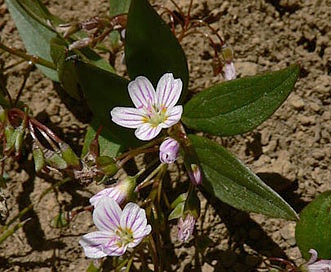

©2007 Walter Siegmund

Description

Delicate , 2-8" tall, with white-pink saucer-shaped flowers, (on one side of stem). Flowers have shallow notches on their tips and dark pink to purple veins on upper surface. One or more , with long and 2 , stalkless, leaves mid-stem.

Field Marks

Delicate white-pink saucer-shaped flowers; 2 opposite leaves mid-stem.

© Al Schneider

A perennial plant lives and blooms for many years.

A herb is a plant whose stems die back to the ground in the winter.

corm -- a short, thick, fleshy underground stem which sends off roots from its lower face.

In an opposite leaf arrangement the leaves come in pairs with one leaf on each side of a stem.

basal leaves -- a leaf that grows lowest on the stem of a plant.

secund -- With all of the flowers on one side. Having all parts arranged on one side.

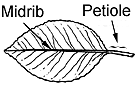
petiole -- the stalk of a leaf.

lanceolate -- Lance-shaped. Long, wider in the middle.