Al Schneider's Rocky Mountains Plant Descriptions

Golden Draba
Draba aurea
Mustard family (Brassicaceae)

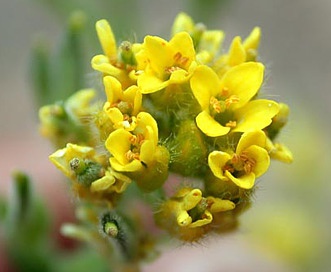
Golden Draba (Draba aurea) is one of the most widely spread and noticeable of the many mountain Drabas. It is very similar and difficult to distinguish from Draba spectabilis found in much the same habitat and also very common in the Colorado Rockies. Because of an abundance of hairs, D. aurea tends to be gray/green. D. spectabilis tends to be bright green because it is (smooth, not hairy) or has fewer and less forked hairs. Seeing the hairs is difficult and requires a steady hand and a 10 power hand lens. D. aurea seed pods are hairy and often twisted and the seed pod stems are short; seed pods of D. spectabilis are and straight (but can be twisted) and its stems are long. There are many other Drabas found in the area, most are quite small, easily overlooked, and a great treat to meet. See Draba cana for a somewhat similar species. "Aurea" is Latin for "golden."

© Mary Ellen (Mel) Harte, Bugwood.org

Description

not mat forming, stems to 16" (usually ~7-10"), one or often few, . 1 1/2" long, wider toward tip, or with tiny edges, . Stem leaves few to numerous, broadly , , or wider toward tip, to 1+", or often with slight denticulation, hairy. often with many flowers; short, green, hairy; petals about twice as long as , yellow. often contorted.

Field Marks

Gray-green hairy leaves, often on stem leaves, bright yellow flowers.

© Al Schneider

An entire leaf has smooth edges. Not toothed or lobed.

A perennial plant lives and blooms for many years.

ovate -- Oval, egg-shaped, with a tapering point.

pubescent -- downy; covered with short, soft, erect hairs.

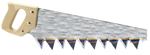
serrate -- toothed with asymmetrical teeth pointing forward; like the cutting edge of a saw.

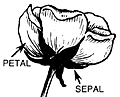
Usually green, sepals typically function as protection for the flower in bud, and often as support for the petals when in bloom.

Like the teeth on a saw, leaves and other surfaces can have toothed edges.

fruit -- any seed-bearing structure in flowering plants. It is formed from the ovary after flowering.

basal leaves -- a leaf that grows lowest on the stem of a plant.

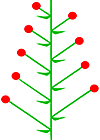
A raceme is an unbranched, indeterminate type of inflorescence bearing flowers having short floral stalks along its axis.

glabrous -- smooth, glossy, having no bristles or hair-like structures. Bald.

lanceolate -- Lance-shaped. Long, wider in the middle.