Russian-olive Elaeagnus angustifolia Oleaster family (Elaeagnaceae)
The Russian Olive was intentionally introduced from southern Europe as an ornamental shade tree and a source of cover and food for wildlife and it was also widely distributed across the West as a windbreak in the 1930s. It commonly invades riparian and wetland areas and replaces native vegetation. Its intentional planting is no longer encouraged. All federal and many local land agencies have mounted massive, costly efforts to eradicate this tree. "Elaeo" is Greek for "olive" and "agnos" for "chaste." "Angustifolia" is Latin for "narrow leaved." Linnaeus described this plant from Eurasia in his 1753 "Species Plantarum."
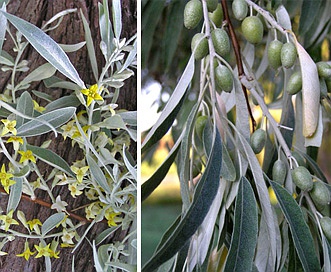
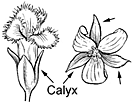
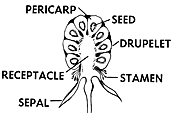
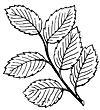
Medium-sized tree, to 40' tall, and several feet thick, non-native, grows rapidly with a distinct silver and green foliage. Leaves are , narrow, 2-4" long, covered with starburst hairs and , more abundant on underside. Young shoots silvery gray turning woody with furrowed, somewhat shredding bark in age. Trunk and branches often armed with 1-2" woody . Flowers are intensely fragrant, silvery, with yellow , somewhat hairy with starburst hairs; forming a 4- trumpet. shaped like small olives, silvery when they first appear, turning brown at maturity, enveloped in a fleshy covering, hence -like.