Al Schneider's Rocky Mountains Plant Descriptions

Common Alp-lily
Gagea serotina
Lily family (Liliaceae)

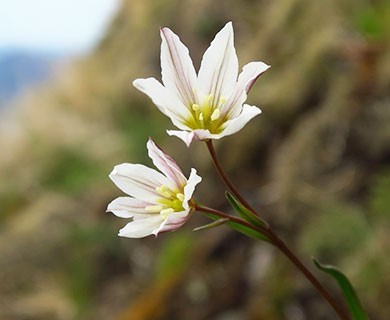
This dainty lily grows in , often abundantly. Lloydia serotina might, because of its long thin leaves, be taken for Geyer's Onion (Allium geyeri), but once the flower appears the difference is evident. Richard Salisbury named this species Lloydia serotina in 1830, changing Linnaeus' original 1753 name of Bulbocodium serotinum. "Lloydia" is for Edward Lloyd, Curator of the Museum of Oxford University and discoverer of this plant in Wales. "Serotina" is Latin for "late."

©2021 Adam Schneider
Description

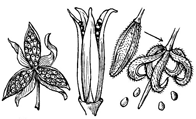
bulbous arising from . Stems slender, erect, several leaves about as long as stem. Plants from 2-7" tall, small, clothed with a brown coat. Stem , reduced upward, from 1/2 to 1 1/2" long. Flowers creamy white, 1/3-1/2" long, the narrow segments purple-veined and tinged with rose on back. a about 1/3" long.

Field Marks

Dainty, very slender plant topped with upturned white flower.

© Al Schneider

meadow -- Large grass and wildflower filled area with few, if any, trees.

A perennial plant lives and blooms for many years.

A herb is a plant whose stems die back to the ground in the winter.

perianth -- the non-reproductive part of the flower such as petals and sepals.

capsule -- a type of simple, dry fruit produced by many species of flowering plants. In most cases the capsule splits apart to release seeds.

fruit -- any seed-bearing structure in flowering plants. It is formed from the ovary after flowering.

A bulb is an underground stem, the main body of which consists of thickened scales, which are in reality leaves or leaf bases, as in the onion.

alpine -- above the tree line. Thin soil, rocks, short growing season, frost, winter snow.

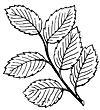
leaves alternate along the main stem and are attached singly.

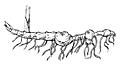
rhizome -- root-like stems that may either grow horizontally at the soil surface or in other orientations underground.