Al Schneider's Rocky Mountains Plant Descriptions

Wild Licorice
Glycyrrhiza lepidota
Pea family (Fabaceae)

Wild Licorice can be weedy and colonize disturbed soils. The roots are edible and contain glycyrrhizin, which tastes much sweeter than sugar. When roasted, roots of Wild Licorice are said to taste like sweet potato. The generic name is derived from the Greek words, "glykys," for "sweet," and "rhiza," for "root." The burr-like seed pods readily attach themselves to you and your pets.


©2008 Keir Morse

Description

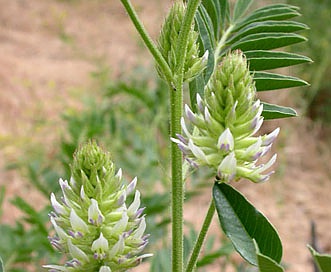
Erect, branching , 1-3' tall, with sticky stems. , with 7-15 . have that appear as dots under magnification. Mature stems often red. Yellow-white flowers arise from the leaf axils in dense . Seed pods are large, obvious, brown, burr-like, armed with hooked .
Field Marks

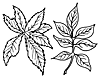
Yellow-white flower clusters, red stems, compound leaves.

© Al Schneider

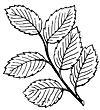
A leaf is compound when multiple leaflets are on the same stem.

A perennial plant lives and blooms for many years.

leaflets -- Each little leaf-like thing in a compound leaf is a leaflet.

A herb is a plant whose stems die back to the ground in the winter.

Glands are plant structures that secrete liquids, salts or other substances. Glands often appear as hairs with a drop of liquid at the end.

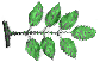
pinnate -- A compound leaf with two rows of leaflets.

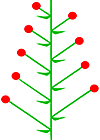
leaves alternate along the main stem and are attached singly.

bristle -- A straight, stiff hair.

A raceme is an unbranched, indeterminate type of inflorescence bearing flowers having short floral stalks along its axis.

lanceolate -- Lance-shaped. Long, wider in the middle.

sessile -- attached without a stalk. For example, a leaf that clasps the stalk. A petiolate leaf has a stalk.