Cow-parsnip Heracleum maximum Carrot family (Apiaceae)
Cow Parsnip is rich in minerals and favored by grazing animals, hence its common name. In herbal medicine, this plant has long been used to treat epilepsy. Stalks and roots are often peeled and roasted as a vegetable. Cow Parsnip may be confused with water hemlock, which is extremely poisonous. The was named for Hercules for the plant was thought to have potent powers.
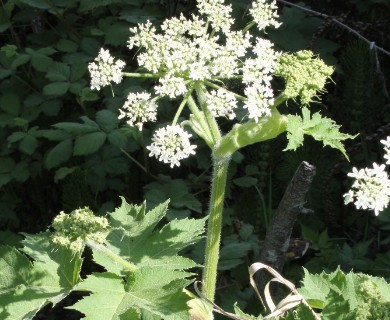
Large , 3-8' tall, that towers over surrounding vegetation. Tall hollow, very hairy stems support large (up to 12" in diameter), flat-topped of white flowers, with smaller arising from leaf axils. Individual flowers comprised of 5 deeply petals. Flower smell is strong, sweet, and a bit over-powering. Large maple-like leaves, 12-16" across, are into 3 , with stems that are at their base. are flat disks. Cow Parsnip enjoys moist ground and is often found in wide-spread stands under an Aspen .
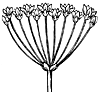
An umbel is a collection of flowers on short stalks which spread from a common point,
somewhat like umbrella ribs. The arrangement can vary from being flat-topped to almost spherical.
inflated -- Swollen. Looks unusually large.
A perennial plant lives and blooms for many years.
A herb is a plant whose stems die back to the ground in the winter.
fruit -- any seed-bearing structure in flowering plants.
It is formed from the ovary after flowering.
palmate -- Consisting of leaflets or lobes radiating from the base of the leaf.
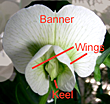
wing -- Pea flowers have wings.
canopy -- The foliage of a tree; the crown. Also the upper layer of a forest.
genus -- A subdivision of a botanical Family in which all members have a significant
number of similar characteristics.
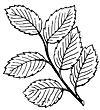
alternate -- leaves alternate along the main stem and
are attached singly.
palmately lobed -- with lobes spread radially from a point.
leaflets -- Each little leaf-like thing in a compound leaf is a leaflet.