Al Schneider's Rocky Mountains Plant Descriptions

Hairy Goldenaster
Heterotheca villosa
Aster family (Asteraceae)

Golden Aster is abundant not only in the foothills and mountains, but also in vacant lots, farmyards, and along roadsides. It needs little water, often blooms for three or four months, seeds itself readily (and spreads from roots), and has a marvelous spicy-sharp aroma. The species exists in several varieties distinguished by difference in hairiness and leaf color variations. Dwarf Golden Aster Heterotheca pumila can be a very common plant in the and zones.

"Hetero" is Greek for "different" and "theca" for "case," referring to the differing seeds of the ray and disk flowers. This is an unusual characteristic, for other Sunflower Family members produce identical seeds from the outer and the inner disk flowers."Villosa" is Latin for "hairy."


©2010 Matt Lavin

Description

Spreading, clump-forming , to 20" tall and wide, with grey-green to blue-green, -hairy foliage, and yellow flowers. Flowerheads in short, open, flat-topped clusters comprised of a yellow surrounded by 10-25 yellow . in overlapping rows. , with margins. are flattened, hairy, with long, hair-like .

Field Marks

Symmetrical mound of small yellow flowerheads with grey-green aromatic hairy leaves and stems.

© Al Schneider

silky -- Covered with fine soft hairs, with a lustrous sheen. Satiny to the touch.

An entire leaf has smooth edges. Not toothed or lobed.

A perennial plant lives and blooms for many years.

A herb is a plant whose stems die back to the ground in the winter.

subalpine -- Just below the timberline.

ray flowers -- The outer petals of a sunflower or daisy are ray flowers.

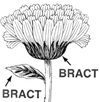
Bracts are modified leaves associated with a flower.

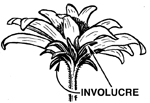
Involucre is the name given to the circle or spiral collection of bracts around a flower-cluster.

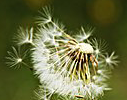
pappus -- Small scales, bristles or hairs at the top of the seed in Asteraceae. For example, dandelion parachutes. Plural: pappi.

fruit -- any seed-bearing structure in flowering plants. It is formed from the ovary after flowering.

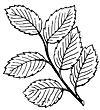
leaves alternate along the main stem and are attached singly.

disc flowers are those in the center of a sunflower or daisy. Not a ray flower.

lanceolate -- Lance-shaped. Long, wider in the middle.

alpine -- above the tree line. Thin soil, rocks, short growing season, frost, winter snow.