Al Schneider's Rocky Mountains Plant Descriptions

Cliffbush
Jamesia americana
Hydrangea/Mockorange family (Hydrangeaceae)

Waxflower is a fairly common shrub through the mountains of eastern Colorado and southward through the mountains of New Mexico to Mexico. Waxflower is usually found on warm, southern exposures in rock walls. Its peeling, stiff branches, deeply veined leaves, and small but showy clusters of white flowers all make the plant fairly easy to identify.


©2008 Stan Shebs

Description

Shrub from 12 to 60" tall with foliage and young twigs. Bark of twigs red or white, exfoliating in long white or translucent strips. about 1/4" long. Leaf from 1/3 to 2" long and 1/4 to 1+" wide, or , or , rarely , hairy. Flowers few in small clusters. Petals 1/5 to almost 1/2" long, white, abruptly narrowed at base, somewhat hairy. 10. a to 1/5" long.
Field Marks

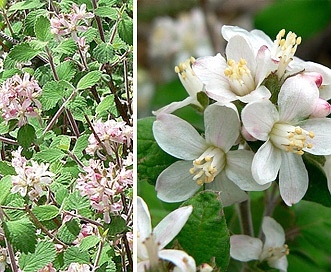
Shrub with peeling bark, stiff branches, deeply veined leaves, and small clusters of delicate white flowers.

© Al Schneider

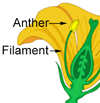
stamen -- the pollen-producing reproductive organ of a flower; The stamen consists of an anther supported by a filament.

An entire leaf has smooth edges. Not toothed or lobed.

ovate -- Oval, egg-shaped, with a tapering point.

pubescent -- downy; covered with short, soft, erect hairs.

serrate -- toothed with asymmetrical teeth pointing forward; like the cutting edge of a saw.

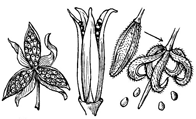
capsule -- a type of simple, dry fruit produced by many species of flowering plants. In most cases the capsule splits apart to release seeds.

fruit -- any seed-bearing structure in flowering plants. It is formed from the ovary after flowering.

elliptic -- Oval, with no point or a very short point.

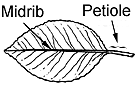
petiole -- the stalk of a leaf.

blade -- Just the flat part of a leaf. Not the stem.

dentate -- with sharp, outward-pointing teeth