Al Schneider's Rocky Mountains Plant Descriptions

Dwarf Lewisia
Lewisia pygmaea
Claytonia/Lewisia family (Montiaceae)

Pygmy Bitterroot is a smaller, high altitude version of Bitterroot (L. rediviva), the state flower of Montana. Many Indian tribes timed their spring migrations with the blooming of bitterroots on the gravel river bars and hillsides. Dug, cleaned, and dried, the root provided a lightweight, nutritious supplement to a wild-game diet. In 1814 Frederick Pursh named a new "Lewisia" in honor of Meriwether Lewis who collected the first specimens of this for science in Montana in 1806.

©2009 Barry Breckling
Description

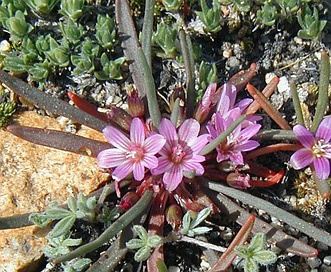
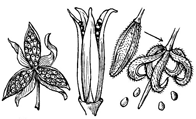
Low succulent , 1-4" tall, from a fleshy, carrotlike root. Leaves are , fleshy, and up to 6" long. One or more flower stems are shorter than leaves with 2 small leaf-like joined midway up stem. Single small pink to white flowers at the end of stems. Flower comprised of 6-8 petals and 2 distinct oval fleshy , often with tiny on the margin. are approximately the size of the .

Field Marks

Very low succulent with pink or white blooms.

© Al Schneider

capsule -- a type of simple, dry fruit produced by many species of flowering plants. In most cases the capsule splits apart to release seeds.

A perennial plant lives and blooms for many years.

membranous -- thin, somewhat translucent and flexible.

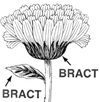
Bracts are modified leaves associated with a flower.

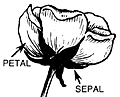
Usually green, sepals typically function as protection for the flower in bud, and often as support for the petals when in bloom.

basal -- at the base, situated or attached at the base.

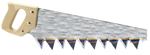
Like the teeth on a saw, leaves and other surfaces can have toothed edges.

fruit -- any seed-bearing structure in flowering plants. It is formed from the ovary after flowering.

genus -- A subdivision of a botanical Family in which all members have a significant number of similar characteristics.

linear -- Long and very narrow like a blade of grass.