Al Schneider's Rocky Mountains Plant Descriptions

Corn Mint
Mentha arvensis
Mint family (Lamiaceae)

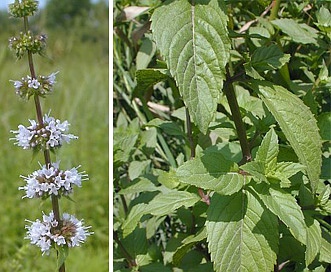
A native mint, Field Mint is often lost in lush greenery of wet areas. You will usually smell the plant before you see it, especially if you crush it under foot. "Mentha" is the classical Latin name for mint and is derived from mythology: Minthe was a nymph pursued by Hades whose wife, Persephone, was not too fond of this shady pass-time and removed Mentha from the field of play by putting her into a field of flowers as a mint. "Arvensis" is Latin for "field."

©2003-2014 John Hilty, Illinois Wildflowers
Description

Aromatic , 8-30" tall, with 4-sided stems and leaves that are held rigid and horizontal. White-pink bell-shaped flowers in dense whorls in leaf axils of upper leaves. and project from flower mouth. , lance- to egg-shaped, sharp , or hairy. Distinctive minty smell. are 4 small .

Field Marks

Aromatic, 4-sided stems with pink flowers in leaf axils and leaves.

© Al Schneider

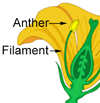
stamen -- the pollen-producing reproductive organ of a flower; The stamen consists of an anther supported by a filament.

A perennial plant lives and blooms for many years.

A herb is a plant whose stems die back to the ground in the winter.

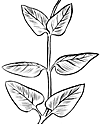
In an opposite leaf arrangement the leaves come in pairs with one leaf on each side of a stem.

a small nut. A nut being a hard, dry fruit containing only one seed that does not open at maturity.

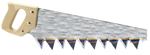
Like the teeth on a saw, leaves and other surfaces can have toothed edges.

fruit -- any seed-bearing structure in flowering plants. It is formed from the ovary after flowering.

In an opposite leaf arrangement the leaves come in pairs with one leaf on each side of a stem.

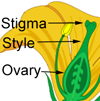
stigma - The tip of a pistil that receives the pollen.

glabrous -- smooth, glossy, having no bristles or hair-like structures. Bald.