Elephant's Head Pedicularis groenlandica Broomrape/Paintbrush family (Orobanchaceae)
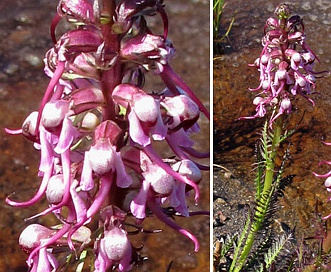
Once you observe this plant, you can honestly say you've seen pink elephants. Red fern-like leaves appear first in early summer, followed by dark stems, and then flowering stalks. Elephanthead is a plant whose roots () penetrate roots of other plants for nourishment. Plants bloom for many weeks, making this one of the most widely known -- and gasped at -- wildflowers. Even the dried seed heads continue to show the elephant's trunk. Pedicularis groenlandica is found throughout the western United States and across all of Canada.
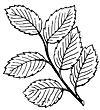
Erect , 8-26" tall, with distinctive flowers shaped like an elephant's head. Pink-purple flowers arranged in dense -like cluster atop red-purple stems. Individual flowers are hooded with short side petals (the ears) and long slender upturned upper lip () resembling an elephant's trunk. Small, almost , fern-like leaves are divided into fine sharp- segments with larger leaves basally arranged while stem leaves are and gradually reduced upwards. The specific epithet referring to Greenland was erroneously assigned; the plant does not grow there.
haustoria -- A slender projection from the root of a parasitic plant enabling the parasite to
penetrate the tissues of its host and absorb nutrients from it.
A perennial plant lives and blooms for many years.
A herb is a plant whose stems die back to the ground in the winter.
A parasitic plant derives some or all of its nutritional requirements
from another living plant.
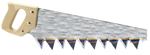
Like the teeth on a saw, leaves and other surfaces can have toothed edges.
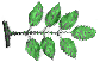
pinnate -- A compound leaf with two rows of leaflets.
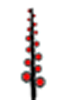
A spike is an unbranched, indeterminate inflorescence in which the flowers
are without stalks.
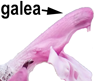
A galea is an overhanging, helmet-shaped, part of the flower that protects the reproductive parts.
alternate -- leaves alternate along the main stem and
are attached singly.
linear -- Long and very narrow like a blade of grass.