Al Schneider's Rocky Mountains Plant Descriptions

Giant Lousewort
Pedicularis procera
Broomrape/Paintbrush family (Orobanchaceae)

Giant Lousewort (Pedicularis procera) can grow to be a giant of five feet. Its large, hooded flowers are a creamy yellow with streaks of orange-red. It is fairly common and very obvious in moist forests and forest openings in the higher mountains, first attracting attention as it emerges from the ground with large, fern-like leaves, sometimes pink. It is common for a number of plants to be found near each other and it is common for the flower head to be nipped off by Deer and Elk.

"Procera" is Latin for "tall." Charles Parry collected this in the mountains west of Denver in 1861 and had it described by Asa Gray in 1862. The name, "Pedicularis," given by Linnaeus in 1753, is derived from the Latin "pediculus," meaning "lice." A bygone belief had it that the plant gave lice to people and cattle. Or, according to some sources, the plant was thought to cure people or cattle of lice! "Wort" is from Old English, "wyrt," meaning "plant."
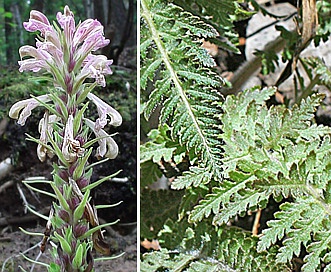

©2007 Russ Kleinman, ©2009 Russ Kleinman, Bill
Norris, Richard Felger & Leith Young, Western New
Mexico University Department of Natural Sciences
and the Dale A. Zimmerman Herbarium

Description

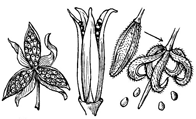
plants with stems often to over 3' tall, or above and in . Leaves to 2' long, and , or somewhat hairy at first, divided nearly to the mid-rib, divided again, or . long to about 1 1/2', with many flowers. often longer than flowers. an inch or more long, yellow, often streaked with red or rusty orange. Cap of flower curving downward, without a , but with two . a .

Field Marks

Very tall plant with large, fern-like leaves and long of large yellow flowers often red streaked.

© Al Schneider

cauline -- Leaves that are on the stem. Not basal.

capsule -- a type of simple, dry fruit produced by many species of flowering plants. In most cases the capsule splits apart to release seeds.

A perennial plant lives and blooms for many years.

lobe -- A rounded parts of a leaf (or other organ).

A herb is a plant whose stems die back to the ground in the winter.

pubescent -- downy; covered with short, soft, erect hairs.

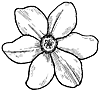
corolla -- The name for all the petals of a flower taken together.

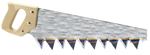
serrate -- toothed with asymmetrical teeth pointing forward; like the cutting edge of a saw.

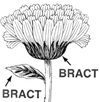
Bracts are modified leaves associated with a flower.

basal -- at the base, situated or attached at the base.

Like the teeth on a saw, leaves and other surfaces can have toothed edges.

fruit -- any seed-bearing structure in flowering plants. It is formed from the ovary after flowering.

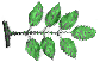
pinnate -- A compound leaf with two rows of leaflets.

beak -- A pointy thing on a seed or fruit.

Cut deeply and (usually) unevenly (a condition intermediate between toothed and lobed).

genus -- A subdivision of a botanical Family in which all members have a significant number of similar characteristics.

glabrous -- smooth, glossy, having no bristles or hair-like structures. Bald.

leaflets -- Each little leaf-like thing in a compound leaf is a leaflet.

An inflorescence is a group or cluster of flowers arranged on a stem.