Al Schneider's Rocky Mountains Plant Descriptions

White Phacelia
Phacelia alba
Waterleaf family (Hydrophyllaceae)

Compare this Phacelia with the other members of the Waterleaf Family (Hydrophyllaceae). They have delicate flowers with an exotic, very appealing beauty. Unfortunately some of this beauty (the plant's juices) can be severely irritating to some people. Look, but don't touch. Per Axel Rydberg named and described this plant in 1901 from specimens that he and Vreeland collected in July of 1900 along Sangre de Cristo Creek in Colorado.


©2007 Patrick Alexander

Description

plant from 2 to 48" tall. Stems simple to branched, leafy, hairy, and . Leaves from 1 to 4" long, short-hairy and somewhat , lowermost long-, upper . of dense scorpioid clusters. white to lavender or pale blue, tubular-, 1-2" long and wide, . well to 1/6". . a , hairy and sticky.
Field Marks

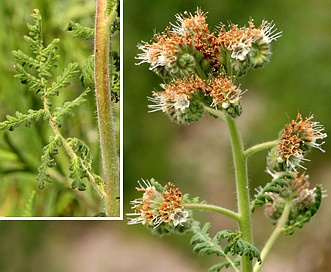
Very hairy plant with deeply leaves and numerous scorpion tale clusters of white flowers fading rust.

© Al Schneider

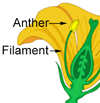
stamen -- the pollen-producing reproductive organ of a flower; The stamen consists of an anther supported by a filament.

petiolate -- a leaf that has a stem. A sessile leaf has no stem.

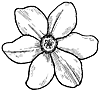
corolla -- The name for all the petals of a flower taken together.

lobe -- Being divided by clefts.

pinnatifid -- A leaf shape that is pinnately lobed but not cut all the way to the axis.

lobe -- A rounded parts of a leaf (or other organ).

A herb is a plant whose stems die back to the ground in the winter.

pubescent -- downy; covered with short, soft, erect hairs.

An annual plant is a plant that completes its life cycle, from germination to the production of seed, within one year, and then dies.

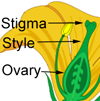
style -- This is a long and thread-like structure that connects the stigma with the ovary. A flower may have a single style, or several of them.

Glands are plant structures that secrete liquids, salts or other substances. Glands often appear as hairs with a drop of liquid at the end.

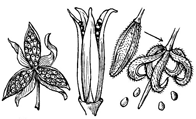
capsule -- a type of simple, dry fruit produced by many species of flowering plants. In most cases the capsule splits apart to release seeds.

fruit -- any seed-bearing structure in flowering plants. It is formed from the ovary after flowering.

sessile -- attached without a stalk. For example, a leaf that clasps the stalk. A petiolate leaf has a stalk.

campanulate -- bell shaped

exserted -- projected beyond. (Exserted stamens project beyond the corolla tube.)

An inflorescence is a group or cluster of flowers arranged on a stem.