Al Schneider's Rocky Mountains Plant Descriptions

Wedgeleaf Fogfruit
Phyla cuneifolia
Verbena family (Verbenaceae)

This plant of the low foothills wetlands sprawls along the ground with masses of intertwined stems and an abundance of lovely flowers. The name "phlya," "a tribe," was given because of the grouping of flowers; the specific epithet "cuneifolia" means "wedge-shaped leaves." Edward Green found this plant along the Platte River in the 1890s.


©2013 Sue Carnahan

Description

plant, stems to 3' long, hairy to almost . Leaves , from 2/5 to 2" long, thick and rigid, , with 1-4 pair of above the middle and near the , hairy both sides. from shorter than the leaves to 2" long. Flowerheads in flower, elongating in . about 1 1/2" long, white to pink or purple-rose. of two .

Field Marks

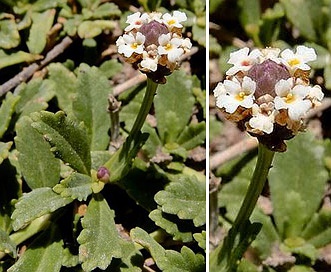
Sprawling intertwined mat of long stems topped by showy clusters of white flowers.

© Al Schneider

oblanceolate -- top wider than bottom

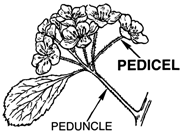
A peduncle is a common stalk of a cluster of flowers.

A perennial plant lives and blooms for many years.

The apex is the tip or the furthest point from the attachment.

A herb is a plant whose stems die back to the ground in the winter.

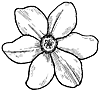
corolla -- The name for all the petals of a flower taken together.

a small nut. A nut being a hard, dry fruit containing only one seed that does not open at maturity.

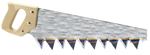
Like the teeth on a saw, leaves and other surfaces can have toothed edges.

fruit -- any seed-bearing structure in flowering plants. It is formed from the ovary after flowering.

sessile -- attached without a stalk. For example, a leaf that clasps the stalk. A petiolate leaf has a stalk.

globose -- Shaped like a ping pong ball, only smaller.

canescent -- a white coating often due to fine grayish-white hairs.

genus -- A subdivision of a botanical Family in which all members have a significant number of similar characteristics.