Engelmann Spruce
Picea engelmannii
Pine family (Pinaceae)
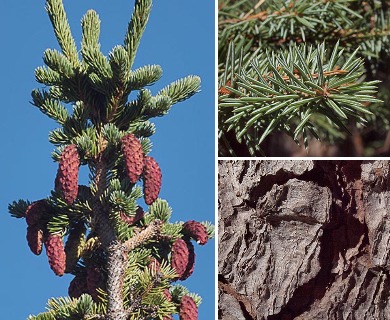
You know a spruce when you shake hands with it -- its needles bite. It is one of two native spruce of the region and this one is found in the higher cold environments. Engelmann Spruce is an important lumber source. Many stands have been decimated in recent years by the spruce bark beetle. The seeds are eaten by several species of small mammals and birds, and spruce stands provide excellent hiding and thermal cover for big game. Some trees have witches' brooms, an abnormal outgrowth of branches resembling the sweeping end of a broom. The broom is caused by a rust (fungus) disease or Dwarf Mistletoe. Engelmann Spruce is named for German-born St. Louis botanist George Engelmann, who was responsible for naming and describing many of the West's plants during the 1800s.
©2013 Susan McDougall, Trees Live Here.