Lodgepole Pine
Pinus contorta
Pine family (Pinaceae)
Lodgepole Pine is common to uncommon through the Colorado Rockies but it becomes one of the most common trees in the Northern Rocky Mountains. Lodgepole produce serotinous cones that remain on the tree for years, and require temperatures above 113 degrees F to melt the resin and release the seed. In nature, only forest fires generate temperatures of this magnitude within a tree's . The wood is extensively used for lumber and poles for buildings and fences. Lodgepole stands provide summer range for big game animals. The tree's name arises from the Native American use of the poles for lodges. David Douglas (of Douglas Fir fame) was the first to identify this tree for science from specimens he found "in swampy ground near the sea coast, and abundantly near Cape Disappointment, Washington and Cape Lookout, Oregon" in the mid-1820s.
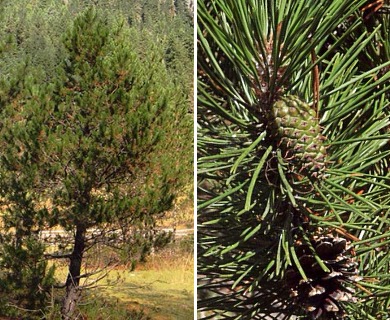
©2014 Susan McDougall, Trees Live Here.