Al Schneider's Rocky Mountains Plant Descriptions

Eastern Cottonwood
Populus deltoides
Poplar-Willow family (Salicaceae)

Populus deltoides, commonly known as the Eastern Cottonwood, is now also known to be the cottonwood of the West. There are several in Colorado from monilifera along the Front Range to wislizenii in the Four Corners area. Other continue across the U.S. and every lower 48 state except Washington has this grand tree. It grows much taller and broader in the East, but it is still quite impressive even in its more arid habitat with a diameter of four or five feet and a number of twisting, leaning trunks to a height of 50 feet.


©2003 Matt Lavin

Description

Tree to 90 feet tall, , bark thick, pale gray-brown, becoming furrowed on old trunks, twigs stout, yellow or orange-brown, , buds hairy, resinous, not aromatic. Leaves broadly -, abruptly pointed, base or , coarsely and irregularly , yellow-green, lustrous and . about 1/6" long, flattened laterally, .

Field Marks

Deeply furrowed massive trunked tree to 90 feet tall with -shaped leaves that whisper "Tammy" in the wind.

© Al Schneider

truncate -- leaf with a squared-off end.

The apex is the tip or the furthest point from the attachment.

serrate -- toothed with asymmetrical teeth pointing forward; like the cutting edge of a saw.

ovate -- Oval, egg-shaped, with a tapering point.

glabrous -- smooth, glossy, having no bristles or hair-like structures. Bald.

deltoid -- a triangular leaf shape. The stem attaches to the middle of a flat side.

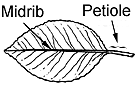
petiole -- the stalk of a leaf.

subspecies -- Plants within a species can be divided into two or more supspecies when a botanist gives them subspecies names and describes how the subspecies differ. Often, variety and subspecies are used interchangeably.

cordate -- heart-shaped.
subcordate -- somewhat heart-shaped.

dioecious -- When male and female reproductive structures are on separate plants.