Al Schneider's Rocky Mountains Plant Descriptions

Common Self-heal
Prunella vulgaris
Mint family (Lamiaceae)

Selfheal is often viewed as a weed in one's garden or lawn. However, the plant is native, worthy of a close inspection, even edible, and has been widely used for a range of medicinal purposes, as its common names suggest. Clinical analysis shows the plant to be effective as an antibacterial agent, and it has shown anti-viral properties against the herpes simplex virus. Linnaeus named this in 1753. The word "Prunella" is either from the Latin for "purple" (as in "prune"), or from the German word "Braune" and then the English cognate, "Brunella." "Braune" is "quinsy," a form of tonsillitis which Prunella was thought to cure.
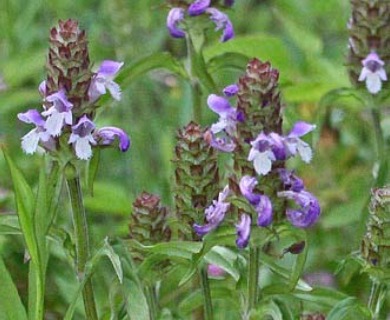

©2010 Jerry Oldenettel

Description

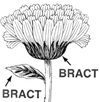
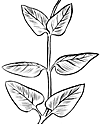
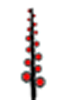
Small , 4-8" tall, with 4-sided stems and blue-violet-pink flowers emerging from short, dense with green . Individual flowers feature upper hooded lip and 3- lower lip. Leaves are few and , to broadly in shape, , and lightly hairy on underside.

Field Marks

Low-growing, green with purple flowers and square stems.

© Al Schneider

lobe -- Being divided by clefts.

A herb is a plant whose stems die back to the ground in the winter.

ovate -- Oval, egg-shaped, with a tapering point.

Bracts are modified leaves associated with a flower.

In an opposite leaf arrangement the leaves come in pairs with one leaf on each side of a stem.

A spike is an unbranched, indeterminate inflorescence in which the flowers are without stalks.

stalk -- The supporting structure of an organ. Examples of stalks are stem, peduncle, petiole, ...

genus -- A subdivision of a botanical Family in which all members have a significant number of similar characteristics.

lanceolate -- Lance-shaped. Long, wider in the middle.

A perennial plant lives and blooms for many years.