Al Schneider's Rocky Mountains Plant Descriptions

Macoun's Buttercup
Ranunculus macounii
Buttercup family (Ranunculaceae)

This Buttercup, as many, spreads over moist areas in the early spring and covers the ground in glistening yellow. Macouns' Buttercup likes riparian woodlands and finds this habitat through all the Rocky Mountain states. The short petals relative to the length and the moderately long, straight or slightly curved beaks are diagnostic characteristics separating this Buttercup species from other tall Buttercups. John Macoun (1831-1920) was a Canadian botanist.
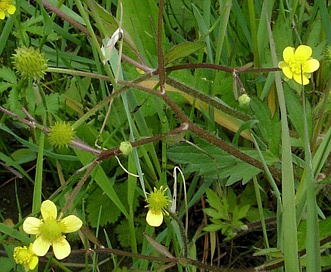

©2008 Alfred Cook
Description

plants with stems to 24" long, and sometimes rooting at the . Smooth to very hairy. 3-parted with , especially the middle . somewhat shorter than petals with spreading hairs. Petals less than 1/3" long, yellow, . many. many in almost globe-shaped head.

Field Marks

Tall Buttercup with 3-parted leaves; sometimes spreads from rooting stems to carpet riparian areas.

© Al Schneider

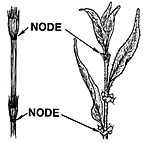
node -- The point at which there is attached growth, as in the place where each leaf is attached.

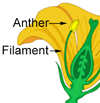
stamen -- the pollen-producing reproductive organ of a flower; The stamen consists of an anther supported by a filament.

A perennial plant lives and blooms for many years.

achene -- a type of simple dry fruit produced by many species of flowering plants. For example, a rose hip holds a few achenes.

obovate -- Teardrop-shaped, stem attaches to tapering point.

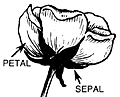
Usually green, sepals typically function as protection for the flower in bud, and often as support for the petals when in bloom.

basal leaves -- a leaf that grows lowest on the stem of a plant.

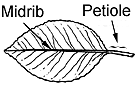
petiole -- the stalk of a leaf.

decumbent -- with branches growing horizontally on the ground, but turned up at the ends.

leaflets -- Each little leaf-like thing in a compound leaf is a leaflet.