Al Schneider's Rocky Mountains Plant Descriptions

Western Roseroot
Rhodiola integrifolia
Stonecrop family (Crassulaceae)

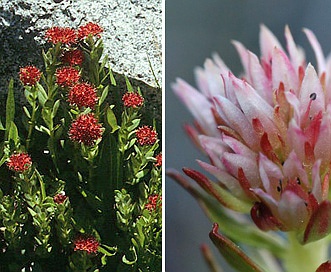
Rhodiola integrifolia and Rhodiola rhodantha are a bit difficult to tell apart. Flower clusters of the former are flattened, purple pancakes. Rhodiola rhodantha's flower cluster is a rounded pink cylinder. Rhodiola integrifolia often grows in a variety of wet and dry habitats in thick patches making its flowers very noticeable. Most often Rhodiola rhodantha is found scattered in small clusters in wetlands. Both Rhodiola integrifolia and Rhodiola rhodantha turn lovely shades of orange, red, yellow, and green in the fall. "Rhodiola" is Greek for "rose-like." "Integrifolia" is Greek for "entire or uncut leaves." This species was first named by Linnaeus in 1753.

©1993 Gary A. Monroe
Description

from thick, red, fleshy branched rootstocks. Stems to 12" tall. Leaves to 1" long, , , relatively long egg-shaped, usually , moderately thick. Flowers in dense clusters. Petals distinct, about twice as long as , dark rose-purple. longer than petals with purple .

Field Marks

Succulent looking plant to about a foot tall, often in clumps. Deep purple pancake-shaped flower head studded with golden sacks.

© Al Schneider

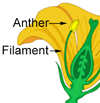
stamen -- the pollen-producing reproductive organ of a flower; The stamen consists of an anther supported by a filament.

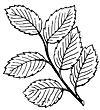
An entire leaf has smooth edges. Not toothed or lobed.

A perennial plant lives and blooms for many years.

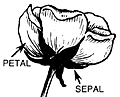
Usually green, sepals typically function as protection for the flower in bud, and often as support for the petals when in bloom.

terminal -- Located at the end (the tip or the apex).

sessile -- attached without a stalk. For example, a leaf that clasps the stalk. A petiolate leaf has a stalk.

The anther is a pad at the end of the stamen that holds the pollen.

alternate -- leaves alternate along the main stem and are attached singly.

filament -- The stalk of a stamen. Other very narrow, thread-like structures.