Al Schneider's Rocky Mountains Plant Descriptions

Cutleaf Coneflower
Rudbeckia laciniata
Aster family (Asteraceae)

Rudbeckia laciniata is one of several Sunflower species sometimes called "Black Eyed Susan" or "Coneflower." Often found in shaded wet soils, the plant's flowerhead has a general unkempt appearance. The Black-eyed Susan of gardens (R. hirta), escapes cultivation and is somewhat similar in appearance, but it has leaves and its petals do not noticeably droop.

This and species were named by Linnaeus in 1753. The name, "Rudbeckia," is for the father and son Professors, Rudbeck, who were predecessors of Linnaeus. "Laciniata" is Latin for "torn or rent," referring to the deeply cut leaves.
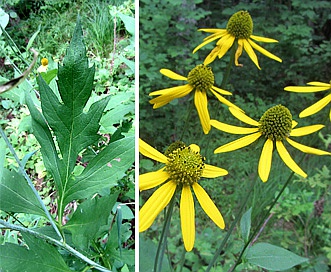

©2011 Homer Edward Price

Description

Erect , growing up to 6' tall. Large flowerheads with a yellow-green to brown disk surrounded by 6-16 dropping, yellow . green, spreading, in 1 row. Tall single to slightly branched stems have , long, broad leaves, deeply to cut into segments. The center disks , becoming brown, as seeds ripen.

Field Marks

Tall yellow composite with large flowerheads, drooping , and large deeply-cut leaves. Wet areas.

© Al Schneider

A perennial plant lives and blooms for many years.

A herb is a plant whose stems die back to the ground in the winter.

ray flowers -- The outer petals of a sunflower or daisy are ray flowers.

ovate -- Oval, egg-shaped, with a tapering point.

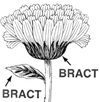
Bracts are modified leaves associated with a flower.

Involucre is the name given to the circle or spiral collection of bracts around a flower-cluster.

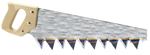
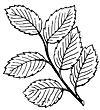
Like the teeth on a saw, leaves and other surfaces can have toothed edges.

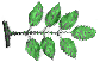
pinnate -- A compound leaf with two rows of leaflets.

palmate -- Consisting of leaflets or lobes radiating from the base of the leaf.

elongate -- long and thin, slender.

genus -- A subdivision of a botanical Family in which all members have a significant number of similar characteristics.

alternate -- leaves alternate along the main stem and are attached singly.

lanceolate -- Lance-shaped. Long, wider in the middle.