Al Schneider's Rocky Mountains Plant Descriptions

Bebb's Willow
Salix bebbiana
Poplar-Willow family (Salicaceae)

Bebb's Willow is common at mid-elevations, preferring wet, coarse soils. Willows are a distinctive group of shrubs and trees, but they are notoriously difficult to identify to the species level, even for seasoned botanists. Willow thickets provide important cover and browse for a wide range of animals. Planting willow-stem cuttings is an important riparian habitat restoration tool. "Salix" is the classical Latin name.
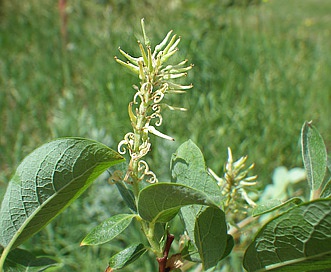

©2012 Matt Lavin
Description

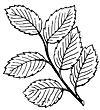
Large shrub or small tree, 6-20' tall, with spreading branches. Leaves are , , elliptical, green on the upper surface, and characteristically white and prominently -veined on the lower. Stems red-brown when young and grey-hairy when mature. Male and female , on different plants, appear with leaves.

Field Marks

elliptical leaves, red-brown stems, near water.

© Al Schneider

reticulate -- forming a network such as veins that join one another at more than one point.

A catkin is a tight cylindrical flower cluster where flowers connect directly to a stem. The flowers generally don't have petals and the stem is often drooping.

Deciduous plants are those that lose all of their leaves for part of the year.

alternate -- leaves alternate along the main stem and are attached singly.

A simple leaf blade is one that is not divided into separate leaflets.