Al Schneider's Rocky Mountains Plant Descriptions

Snow Willow
Salix nivalis
Poplar-Willow family (Salicaceae)

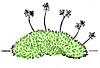
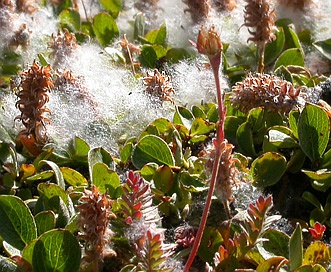
Snow Willow (Salix nivalis) is even tinier than its similar cousin, Rock Willow (Salix petrophila), seldomly towering more than an inch above the ground. Buried in grasses of , both willows are, at first, a challenge to find, but one quickly learns their habitat and then they are easily and commonly found. Both plants are ; male and female flowers are separate. Although Salix nivalis leaves are typically (smooth, without hairs), it is not uncommon to find leaves of young plants hairy on the top, bottom, and edges. The pronounced pattern in the leaves, the more rounded leaf tips, and the shorter stature distinguish Snow Willow from Rock Willow. Red are fairly common on these Salix. "Nivalis" is Latin for "of the snow." Linnaeus named this in 1753 from specimens collected in Lapland. "Salix" is the classical Latin name.

©2003 Matt Lavin
Description

, dwarf shrubs with creeping stems at or just below the ground surface, slender twigs to about 1" long, usually . 1/25 to 1/3" long. Leaf to 1" long and nearly 1" wide, , , , , , green above, beneath, strongly veined. on ends of current shoots. pale green or yellow, or sparsely hairy. to almost 1" long, slender, red or purple. shorter to 3/5" long. to 1/8 inch long, hairy becoming with age.

Field Marks

Dwarf, matted willow with large shiny leaves and upright pink flowerheads.

© Al Schneider

A catkin is a tight cylindrical flower cluster where flowers connect directly to a stem. The flowers generally don't have petals and the stem is often drooping.

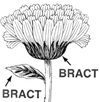
Bracts are modified leaves associated with a flower.

glaucous -- Pale gray or bluish-green. It can mean covered with a greyish, bluish or whitish coating.

gall -- An abnormal bulbous formation on plant leaves or stems.

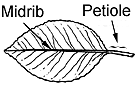
petiole -- the stalk of a leaf.

dioecious -- When male and female reproductive structures are on separate plants.

staminate flowers -- Having only male, pollen producing floral parts.

reticulate -- forming a network such as veins that join one another at more than one point.

pistillate -- a flower that lacks stamens is pistillate, or female. One that lacks pistils is said to be staminate, or male.

glabrous -- smooth, glossy, having no bristles or hair-like structures. Bald.

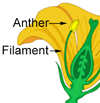
The anther is a pad at the end of the stamen that holds the pollen.

obovate -- Teardrop-shaped, stem attaches to tapering point.

An entire leaf has smooth edges. Not toothed or lobed.

caespitose -- Grass (or plants) growing in small dense clumps or tufts.

orbicular -- Circular or nearly circular in outline.

tundra -- Land above tree line characterized by a short growing season, intense sun and wind, thin soils, very high snow fall and high rain fall. Contains low growing sedges, grasses, dwarf shrubs and herbs.

capsule -- a type of simple, dry fruit produced by many species of flowering plants. In most cases the capsule splits apart to release seeds.

alpine -- above the tree line. Thin soil, rocks, short growing season, frost, winter snow.

genus -- A subdivision of a botanical Family in which all members have a significant number of similar characteristics.

ovate -- Oval, egg-shaped, with a tapering point.

prostrate -- Laying flat on the ground.

blade -- Just the flat part of a leaf. Not the stem.