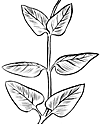
Silver Buffaloberry
Shepherdia argentea
Oleaster family (Elaeagnaceae)
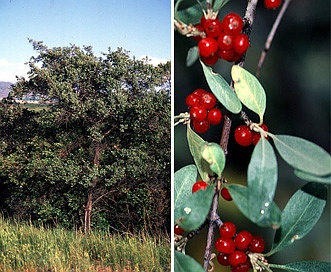
Silver Buffaloberry's rigid and thorny branches provide safe habit for birds and other small critters. are edible, becoming sweeter and less tart after the first frost. Like the Canadian Buffaloberry (S. canadensis), Silver Buffaloberry, contain small amounts of saponin, which should be consumed in limited amounts and which give the its soapy consistency. Silver Buffaloberry is a valuable forage species for mule deer, pronghorn, and other browsers while its are eaten by a wide range of birds and other wildlife. The plant adapts well to disturbed or degraded wet sites and is also commonly used as a shelterbelt species.
The name honors British botanist, John Shepherd. The specific epithet is from the Latin, "argenta," "silvery" for the silvery-green leaves. The was named by Thomas Nuttall in 1818 and he also named this species. Shepherdia argentea was first collected for science by Meriwether Lewis in 1804 where the Niobrara River meets the Missouri River.
© James L. Reveal