Leafy Aster
Symphyotrichum foliaceum
Aster family (Asteraceae)
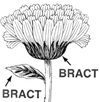
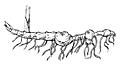
Leafy Aster (Symphyotrichum foliaceum) grows from five to twenty-eight inches tall and is commonly found in small colonies that arise from spreading roots. are often withered at flowering time and stem leaves are broad, prominently veined, and reduced in size and number upwards. Hairs are often in one to few straight lines on the stem below the leaf base. This species is quite similar to Western Mountain Aster (Symphyotrichum spathulatum): If you compare their you will see that S. spathulatum are narrow, variable in length, and the tip is rather small and not sharply pointed; the of S. foliaceum are broad, relatively equal in length (outer are often even longer than inner ones), and much more gradually tapering, eventually to a finely drawn out tip.
Linnaeus named this "Aster" in 1753 and John Lindley named this species in 1836 from a specimen collected by Fischer in Unalaschka. In 1995 Guy Nesom proposed moving many members of the "Aster" to the "Symphyotrichum"; that name is now generally accepted. are hairs and "symphy" means "coming together." So "Symphyotrichum" refers to hairs growing together. "Foliaceum" means "leafy" and refers to a key distinguishing characteristic: the leaf-like . "Spathulatum" means "spoon-shaped."
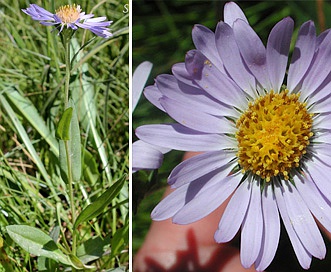
©2012 Paul Slichter