Parry Clover Trifolium parryi Pea family (Fabaceae)
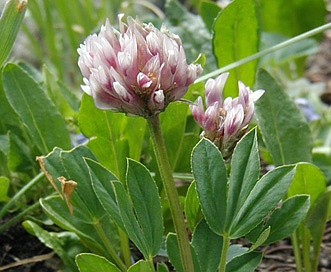
Parry Clover (Trifolium parryi) can be common, sometimes scattered and sometimes in dense colonies in moist upper and openings and . Solitary flower stalks are leafless and erect and flower clusters are considerably above the leaves. Flower color ranges through pinks and lavender/purples. Parry Clover might be confused with the somewhat similar looking Rocky Mountain Clover (Trifolium attenuatum).
In 1862 Asa Gray named this plant for Charles Parry, a highly respected 19th century explorer and naturalist who collected it "On high grassy slopes" at the head-waters of South Clear Creek, east of Middle Park, Colorado.
or short caulescent to 10" tall, from a (woody base of non-woody ) and . Leaf from almost none to 5" long. 3, 1/5 to almost 2" long, flat, from near base, on both sides. Heads 5-20 flowered, subtended by , on 1/12 to 1" long, or slightly hairy. Flowers about 1/2" long , petals pale to dark pink purple fading dark violet, erect. Pods 1-4 seeded.
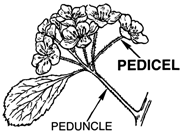
A peduncle is a common stalk of a cluster of flowers.
A perennial plant lives and blooms for many years.
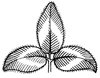
trifoliate -- Divided into three leaflets. Like a clover leaf.
subalpine -- Just below the timberline.
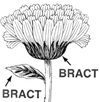
Bracts are modified leaves associated with a flower.
tundra -- Land above tree line characterized by a short growing season, intense sun
and wind, thin soils, very high snow fall and high rain fall. Contains low
growing sedges, grasses, dwarf shrubs and herbs.
taproot -- The primary decending root of a plant.
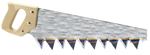
Like the teeth on a saw, leaves and other surfaces can have toothed edges.
acaulescent -- a plant that has no apparent stem,
or at least none visible above ground.
montane -- inhabiting mountainous country but below timberline.
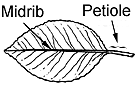
petiole -- the stalk of a leaf.
caudex -- The woody stem base of some herbaceous perennials.
glabrous -- smooth, glossy, having no bristles or hair-like structures. Bald.
leaflets -- Each little leaf-like thing in a compound leaf is a leaflet.
alpine -- above the tree line. Thin soil, rocks, short growing season, frost, winter snow.