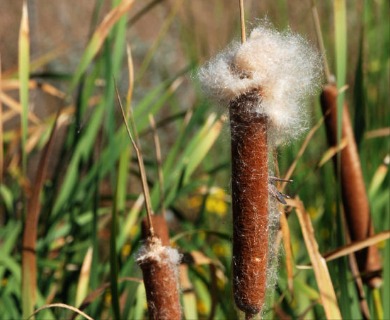
Broad-leaved Cattail Typha latifolia Bur-Reed/Cattail family (Typhaceae)
Cattails often form dense stands in standing year-round water. The plant's roots are edible raw or cooked as are the young emergent shoots.
Linnaeus named this and species in 1753. "" is Latin for "wide leaves." "Typha" is the ancient Greek name for Cattails and perhaps refers to the smoke-like mass dispersal of seeds. "Typh" is Greek for "smoke." The smoke association is quite appropriate since breezes fill the air with a cloud of thousands of Cattail seeds.
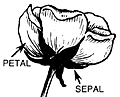
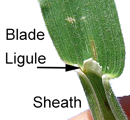
Tall , to 8" tall with erect, smooth, pithy stems. Multitude of tiny flowers (lacking petals or ) in a dense cylindrical . Male () yellow flowers sit above and contiguous to the larger brown female () flower cluster. disappear by mid-summer. Leaves stem at base and are , long, , stiff, and spongy. Goes to seed in a fluff of long, slender hairs. Dried plant persists through winter and often for several seasons.