Al Schneider's Rocky Mountains Plant Descriptions

Thyme-leaved Speedwell
Veronica serpyllifolia
Plantain family (Plantaginaceae)

This lovely miniature enjoys having wet roots, so you will find it in wet a few weeks after snows are gone, along mountain seeps, and next to streams. As soon as you move a few feet back from these areas to drier ground, you will no longer find the plant. Lower stems are weak and recline along the ground, rooting in at leaf and making a small carpet of leaves. Flower stems rise up a few inches above the carpet. Veronica serpyllifolia has numerous, attractive flowers, but the plant is difficult to find because it grows in a lush environment surrounded and surmounted by grasses and numerous other plants. From the height of a human, Veronica serpyllifolia is easily mistaken for Milkvetch (Astragalus alpinus), for the color and general habitat are similar, but a closer hands and knees inspection will show the two plants to be quite different. Linnaeus named this plant in 1753; "serpyllifolium" is Latin for "creeping leaves," i.e., "serpentine leaves."
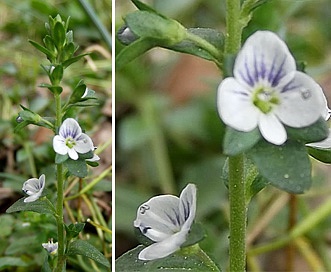

©2011 Jay Sturner
Description

plant from rootstocks. Stems creeping, 2-12" long, to . Leaves 1/5 to 3/5" long, below to upwards on reduced leaves and , lower ones , - or oval, or scalloped. Flowers in clusters. about 1/8" long and wide, blue, rarely white. a , wider than long, notched at .

Field Marks

Creeping, matted, tiny plant with delicate blue flowers.

© Al Schneider

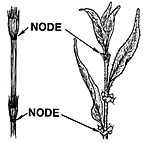
node -- The point at which there is attached growth, as in the place where each leaf is attached.

petiolate -- a leaf that has a stem. A sessile leaf has no stem.

A perennial plant lives and blooms for many years.

An entire leaf has smooth edges. Not toothed or lobed.

A herb is a plant whose stems die back to the ground in the winter.

pubescent -- downy; covered with short, soft, erect hairs.

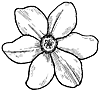
corolla -- The name for all the petals of a flower taken together.

ovate -- Oval, egg-shaped, with a tapering point.

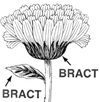
Bracts are modified leaves associated with a flower.

terminal -- Located at the end (the tip or the apex).

The apex is the tip or the furthest point from the attachment.

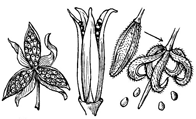
capsule -- a type of simple, dry fruit produced by many species of flowering plants. In most cases the capsule splits apart to release seeds.

fruit -- any seed-bearing structure in flowering plants. It is formed from the ovary after flowering.

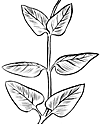
In an opposite leaf arrangement the leaves come in pairs with one leaf on each side of a stem.

montane -- inhabiting mountainous country but below timberline.

oblong -- Having an elongated form with somewhat parallel sides. Rectangular.

alpine -- above the tree line. Thin soil, rocks, short growing season, frost, winter snow.

alternate -- leaves alternate along the main stem and are attached singly.

glabrous -- smooth, glossy, having no bristles or hair-like structures. Bald.

meadow -- Large grass and wildflower filled area with few, if any, trees.